Outdoor Spaces Designed for Regional Climate
Deck Building in Martinsburg for properties needing proper frost-line footings and moisture management
Proper frost-line footings and drainage planning determine whether a deck lasts decades or requires rebuilding within years. West Virginia freeze-thaw cycles shift improperly anchored posts, and moisture accumulation rots joists when ventilation and flashing are skipped. Black Beard Restoration designs and builds custom decks for residential homes across Martinsburg and surrounding areas, using site assessment to match construction methods to soil conditions and slope.
Deck construction begins with evaluating drainage patterns and frost-line depth, then proceeds to post installation, beam and joist framing, decking installation, and railing attachment. Material selection accounts for regional climate—pressure-treated lumber for structural components, composite decking for low-maintenance surfaces, or hardwood for specific aesthetic goals. Proper flashing where the deck attaches to the house prevents water intrusion behind siding.
Request a site evaluation to assess drainage and foundation requirements for your property..
What You Notice Once Deck Construction Is Finished
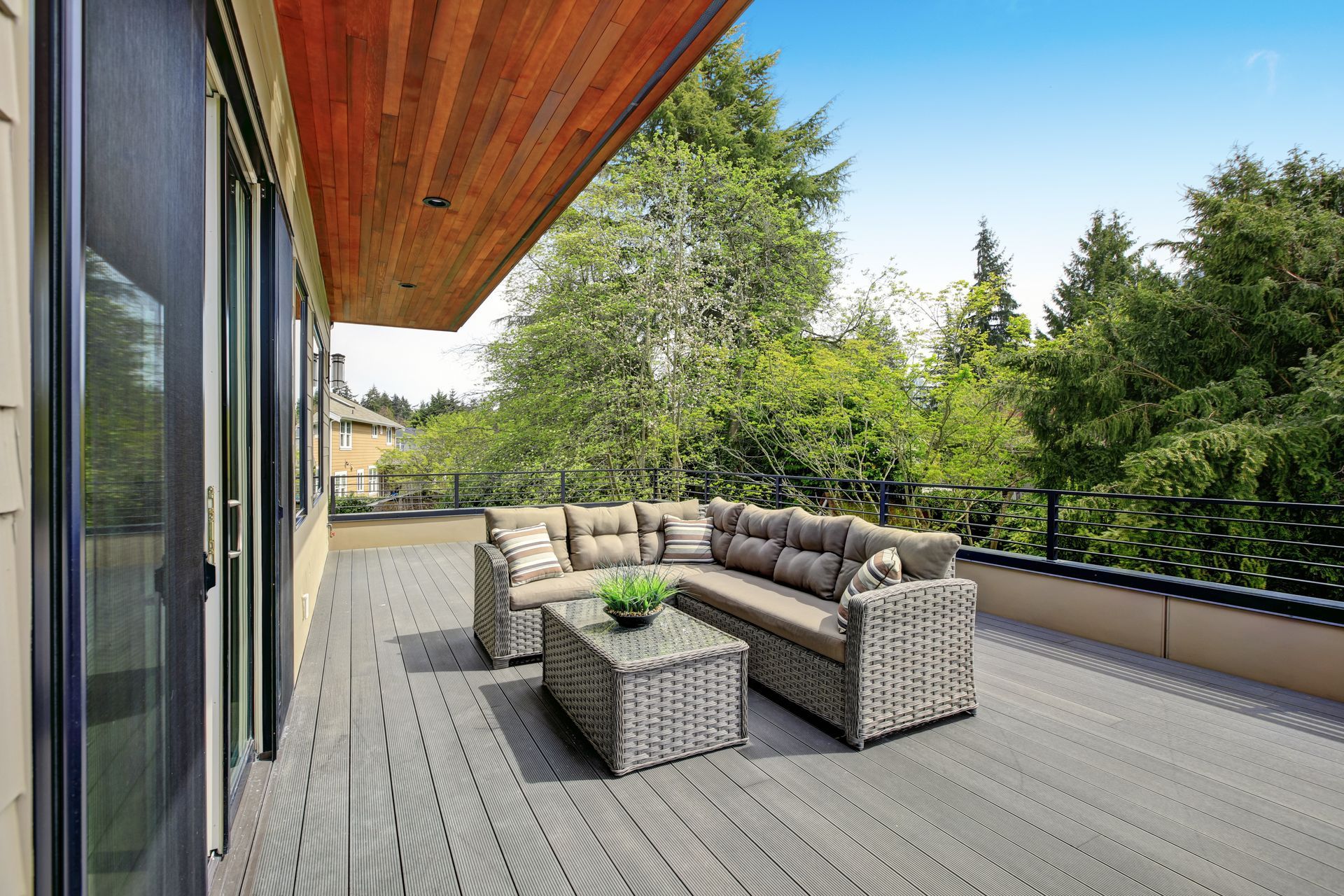
Post-and-beam construction with galvanized hardware resists rust and structural movement, and joist spacing matches decking material specifications to prevent sagging or bounce underfoot. Ventilation gaps between deck boards allow water to drain and air to circulate, reducing the moisture buildup that accelerates wood decay in humid conditions.
After installation, you have a stable outdoor surface that handles furniture weight and foot traffic without flexing, railings secured to structural posts rather than surface-mounted to decking, and drainage that directs water away from the foundation. Seasonal expansion and contraction occur within design tolerances, so boards remain secure and railings stay rigid through temperature swings.
Composite decking requires periodic cleaning but no staining or sealing, while pressure-treated lumber benefits from annual sealant application to extend surface life. Stairs must meet code-compliant riser height and tread depth, and landings require proper footings independent of the main deck structure..
Answers to Frequent Service Questions
Homeowners in Martinsburg often ask about material choices, construction timelines, and maintenance requirements for decks.
What materials work best for decks in West Virginia?
Pressure-treated lumber for framing provides rot resistance, while composite decking eliminates the need for annual staining and handles freeze-thaw cycles without splintering.
How deep do deck footings need to be in the Martinsburg area?
Footings must extend below the frost line—typically 30 inches or deeper depending on local code—to prevent heaving during freeze-thaw cycles.
What determines the timeline for deck construction?
Site preparation requirements, permit approval, material availability, and weather conditions all affect scheduling, with most residential decks completing within one to two weeks after permitting.
How do you prevent moisture damage on decks?
Proper flashing where the deck attaches to the house, ventilation gaps between boards, and drainage grading away from posts all reduce moisture accumulation.
What maintenance does a new deck require?
Composite decks need periodic cleaning, while wood decks benefit from annual sealant application and inspection of hardware for rust or loosening.
Black Beard Restoration builds decks across Martinsburg, Inwood, Kearneysville, Charlestown, Ranson, Shepherdstown, Harpers Ferry, and Hedgesville. Call the office to discuss your deck project and schedule a property assessment.